Texas Athletics recently celebrated the grand opening of the $80 million Frank and Wofford Denius Texas Football Training Complex. The facility is among the most expensive college football training centers in the country, but is only one of dozens of athletic facilities that have emerged at the University since its inception.
From the first UT sports team, a baseball club formed in 1885, all the way to having one of the highest-ranked athletics programs today, Texas Athletics has had a long history of growth. This is reflected in not only the facilities it has constructed to accommodate its sports teams, but also through the coaches, trainers and staff that have assisted the University over the years.
According to the UT Recreational Sports website, the University’s first athletic complex, the Varsity Athletic Field, was established in 1887. It was first utilized by UT’s baseball team when the University was about two years old, but it also hosted the football and track teams until their eventual migrations to Memorial Stadium. In 1904, the athletic field was renamed to Clark Field after James Benjamin Clark, a staff member who worked various positions at the University for more than two decades.
The UT baseball team used Clark Field until the UFCU Disch-Falk Field was constructed in 1975. Now, the plot is known as Caven-Clark Field and is used for informal recreation and as a practice site for the UT men’s and women’s lacrosse teams, according to the UT Recreational Sports website.
Clark Field is also where one of UT’s pioneers of athletic training, Henry “Doc” Reeves, was often seen wrapping ankles or running a bucket of water to the athletes as they played. In this period of time, the technological and medicinal limitations for athletics restricted Reeves to rudimentary materials for tending to the players. According to the Bethany Cemetery Association, Reeves’ materials included a medicine bag, towel and simple water bucket, and his “training room” did not exist outside of the grass field and bleachers at Clark Field, according to the Texas Legacy Support Network.
Erin Crownover, a faculty affairs coordinator for the Office of the Executive Vice President and Provost, said Reeves’ interpersonal connections with the athletes and UT community set the precedent for what athletic trainers and their governing bodies exemplified. She said he contributed to the unique role that trainers play within their programs, even when the available technology was constrained.
“When you think about the impact that (trainers) have on the football players and the players playing on the teams, there’s always this inconsistency with coaches’ turnovers,” Crownover said. “But Henry was kind of the stable figure who was always there.”
In the nearly four decades between Clark Field’s first usage and Memorial Stadium’s construction, the University’s sports progressed from an array of small clubs to an organized program of student athletes and staff. As new sports were invented and existing ones became increasingly regulated and commercialized, Texas Athletics began to grow, implementing traditions for its sports teams and playing more games to solidify its presence in the early days of collegiate athletics. Eventually, the University’s sports environment outgrew its maiden facility and started to plan for constructing new athletic facilities.
The first of these new facilities was Memorial Stadium. Known today as the Darrell K Royal-Texas Memorial Stadium, this facility exemplifies the longstanding history of UT’s development and success in football. It was originally constructed in 1924 at a cost of $275,000, according to the Texas State Historical Association website.
Since its initial construction, the stadium has undergone a number of renovations to add components and facilities, amounting to hundreds of millions of dollars. The official name of the stadium was changed multiple times over the years, from War Memorial Stadium, to Memorial Stadium, to the Texas Memorial Stadium. In 1996, the facility had its most recent and recognizable name change: Darrell K Royal-Texas Memorial Stadium, named after Darrell Royal, a head football coach who led the Longhorns for 20 seasons and to three national championship titles.
Alongside Darrell Royal was Frank Medina, an athletic trainer who served Texas football from 1945 to 1978. He is known for introducing physiotherapy, diathermy and off-season workouts to the UT training room, all of which are commonplace practices today. Medina’s methods regarding strength and conditioning were increasingly medicinal compared to the resources that Reeves had available to him, utilizing tools like ultrasound technology, heat lamps, whirlpools and more, according to David Soliz’s article, “Frank Medina: Trainer for the Texas Longhorns.”
“Everyone knows who Darrell Royal is on this campus if you’re a football fan,” Crownover said. “We have these national championship years and these amazing athletes like Earl Campbell, for example, and Medina really helped make that happen (throughout) those successful years.”
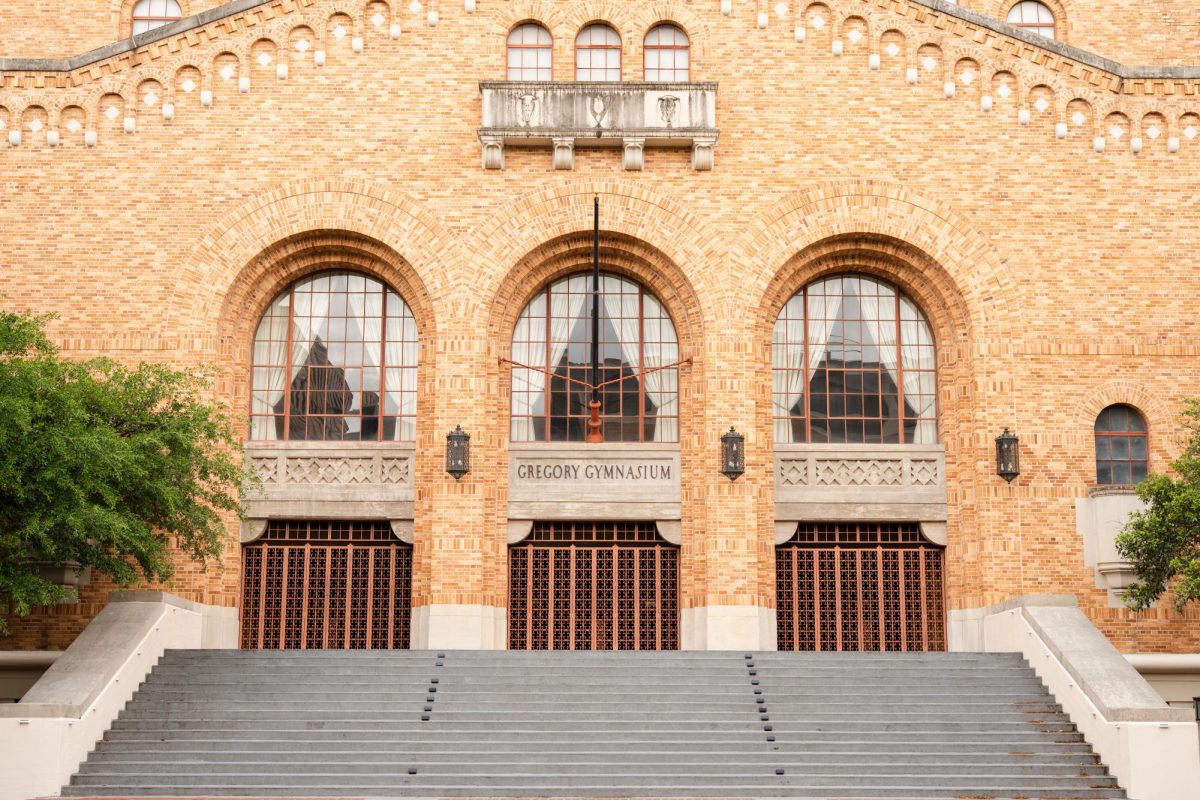
Six years after Memorial Stadium was built, Gregory Gymnasium was constructed in 1930 at an approximate cost of $500,000, according to the UT Recreational Sports website. Since its creation, the historic facility has undergone many multi-million dollar renovations to expand the building and add new resources for students and athletic teams.
Gregory Gym served as the home for UT’s basketball and swimming teams for 46 years, until the Erwin Center and the Jamail Texas Swimming Center were built in 1977. Today, Texas volleyball plays all of their home matches in the gymnasium. The building also contains two fully-equipped weight rooms, an eight-lane pool, racquetball, basketball and volleyball courts, a climbing wall and a track for students and athletes to utilize.
“We worked out in a weight room in Gregory before it underwent its massive renovation in the mid ‘90s,” said Kimberly Beckwith, an assistant professor of instruction at the department of Kinesiology and Health Education. “We didn’t have (air conditioning) in the summer. We didn’t have heat in the winter, and we had windows that didn’t seal very well, so in the winters, you had to do a lot of warm up. … Now, if people had to lift in a non-air-conditioned facility, they probably wouldn’t do it.”
One year later, the Anna Hiss Gymnasium, originally called the Women’s Gym when it opened in 1931, was constructed at an approximate cost of $400,000, according to the H.J. Lutcher Stark Center website. The facility was renamed in 1974 after Anna Hiss, a professor that pioneered the development of women’s athletics at UT and promoted sports for women on campus and beyond. According to the UT Recreational Sports website, Hiss rallied for a separate facility for women’s sports and after traveling across the country to visit other collegiate athletic facilities, she raised funds to build the Women’s Gym.
In 2019, the Anna Hiss Gymnasium was repurposed into a centralized location for the University’s robotics program, after being vacant and underutilized for multiple years.
Though Texas had this dedicated facility for early female athletes, following the passage of Title IX in 1972, opportunities for women’s athletics rapidly expanded. Rebecca “Becky” Bludau Marshall was hired in 1976 as Texas’ first full-time women’s athletics trainer, and despite the almost-century of sports medicine advancements between them, Marshall’s aid materials looked similar to Henry Reeves’. With limited resources and funding, Marshall’s materials consisted of tape, ice and a slight upgrade from Reeves’ time: a folding table, all within a small office in Belmont Hall, according to an interview of Marshall by Erin Crownover for her dissertation.
Christine “Tina” Bonci was the Texas women’s athletics trainer who replaced Marshall in 1985 and worked until her passing in 2014. During her tenure, Bonci made advancements in the Texas sports medicine environment through subgroups regarding nutrition, mental health, return-to-play and sports science for collegiate female student-athletes, according to an interview with Chris Plonsky by Erin Crownover for her dissertation. According to Texas Athletics, Bonci is nationally renowned and recognized for her efforts toward maximizing resources and utilizing sports medicine research to benefit the student athletes she cared for.
The next batch of athletic facilities to be constructed came over four decades later, through a group of more specialized venues catered to their individual sports and uses.
The UFCU Disch-Falk Field, named after former Longhorns coaches Billy Disch and Bibb Falk, was constructed in 1975 at an original cost of $2.5 million, according to the Texas Athletics website. The stadium underwent a major $27 million renovation in 2009 that aimed to expand the seating capacity and improve amenities for the fan experience. In 2019, Texas Baseball unveiled the J. Dan Brown Family Player Development Center, a two-story facility adjacent to the field featuring a new weight room, nutrition center, adjustable batting cages, bullpen and more.
The renovation introduced state-of-the-art training equipment to the UT baseball team, including a 2,200-square-foot bullpen and pitching lab with three mounds and technology for recording and breaking down video.
The Lee and Joe Jamail Texas Swimming Center was constructed in 1977 and named in 1993 after benefactors and alumni Lee and Joe Jamail. Home to the University’s men’s and women’s swimming and diving teams, the center features a competition pool and a separate diving well. According to the Texas Athletics website, the facility hosts intercollegiate and international competitions, kinesiology and health classes, recreational sports events and community programs.
The Frank Erwin Center, otherwise known as “The Drum,” was a multipurpose arena constructed in 1977 at a cost of $34 million, according to the Texas Athletics website. The facility hosted UT men’s and women’s basketball games for 45 years, as well as live entertainment events and graduation ceremonies, from its first game held in 1977 to its last event being a Harlem Globetrotters match in 2022. The arena was officially demolished in 2024 to make way for an academic medical complex, but those plans were scrapped in February, leaving the plot of land vacant since.
Red & Charline McCombs Field was constructed in 1998 at a cost of $4.5 million, according to the Texas Athletics website. Named after benefactors Red and Charline McCombs, the stadium hosts the Texas softball team and features an entrance that allows players direct access to the dugouts from the locker rooms.
A training facility alongside the stadium was completed in 2009 and contains three movable hitting bays and an additional skill development area. It also has recording technology that allows players and coaches to film and review video to adjust swings, pitches and form.
The Indoor Practice Facility, otherwise known as “The Bubble,” was constructed in 2002 for $4 million, according to the Texas Athletics website. The climate-controlled dome is one of three practice fields used mainly by Texas football prior to the new facility constructed this year.
During an interview with 247Sports, head football coach Steve Sarkisian quoted efficiency as one of the main reasons for constructing the new training facility, as the Indoor Practice Facility features only one revolving door as both the entrance and exit for players, coaches and staff. The team also usually resorted to taking a bus for the half-mile trip to Denius Fields and The Bubble, whereas the new facility is just a 5-minute walk from the stadium.
The Moody Center arena was constructed in 2022 for an approximate $375 million, according to the Texas Athletics website. The website also details how the venue replaced the Frank Erwin Center as the home for UT men’s and women’s basketball games, as well as a live entertainment hub for concerts, family shows and other sporting and local events. The over 15,000-seat arena features highly developed facilities for athletics, including training areas, locker rooms and lounges to support the athletes it hosts.
The Frank and Wofford Denius Texas Football Training Complex, the most recent of UT’s athletic facilities constructions, opened earlier this fall and is currently being utilized by the Texas football team. The facility is named after Frank Denius, a highly decorated World War II veteran and Longhorn fan, and his son, Wofford “Woofie” Denius. It was constructed in collaboration with Mortenson Co. costing approximately $80 million, according to the Austin-American Statesman.
“I think it does play a role having these big, new, fancy facilities,” Beckwith said. “Especially at places like Texas, we can attract the best talent. So, we want the best equipment to mold that talent, so that they can be the best athletes (and) the best persons they can be after they get here.”
According to Mortenson’s website regarding the project, the new facility features both indoor and outdoor full-size fields and training areas, as well as “10,000 square feet of multi-purpose event spaces for game-day hospitality and community engagement opportunities.”
“The things that are in training rooms today were maybe only seen in professional sports, mainly NBA, NFL teams, just years ago,” Crownover said. “From Henry to today, we’ve seen the facilities change, the types of technology that practitioners have to get instant feedback on how an athlete’s doing, (and) I think also the pressure has increased.”
According to a release from University of Texas Communications, talks of a new multipurpose arena to accommodate Texas volleyball have circulated since the University issued a request to seek private developers to construct the arena and an adjacent student-athlete housing complex. As the University’s athletics programs continue to evolve, the facilities and resources necessary to accommodate this development may grow in tandem.
Texas Athletics has established a long history of facilities, resources and people that have supported the program throughout its existence. Brian Farr, the director of the Athletic Training Program and a clinical professor at the department of Kinesiology and Health Education, said this overall development of additional staff, increased access to providers and state-of-the-art facilities directly impacts the success and health of the student athletes, while also attracting new talent to continue advancing the program in the future.
“It’s like a ‘walk the walk, talk the talk’ type thing,” Farr said. “Like, ‘We have everything. Here it is,’ but when you really need it, we really do have it. UT has the personnel to take care of it as well, not just the glitzy facilities. So, the athletes here are very well positioned to be very healthy with what UT offers, not just in equipment and facilities, but also staff.”